Dominos Philly Steak Pizza

Dominos Philly Steak Pizza

We open with a clear look at one of the most talked-about menu items: the Domino’s Philly Cheese Steak Pizza. Fans praise its tender steak, caramelized onions, and roasted peppers for a savory bite that keeps them ordering the same pie again and again.

As a Feast-class option, this specialty comes with a higher price point than standard pies at many locations. We explore why that premium feels justified for customers who value bold toppings and hearty slices.

Making this at home can save money and recreate the aroma of the original. We outline key steps to match the thinly cut steak and balanced cheese that define the domino philly cheese experience.

Our guide compares the time to prepare a homemade version versus ordering from your local domino philly outlet, and it shows how small adjustments yield a satisfying, restaurant-style result.

An Overview of the Dominos Philly Cheese Steak Pizza

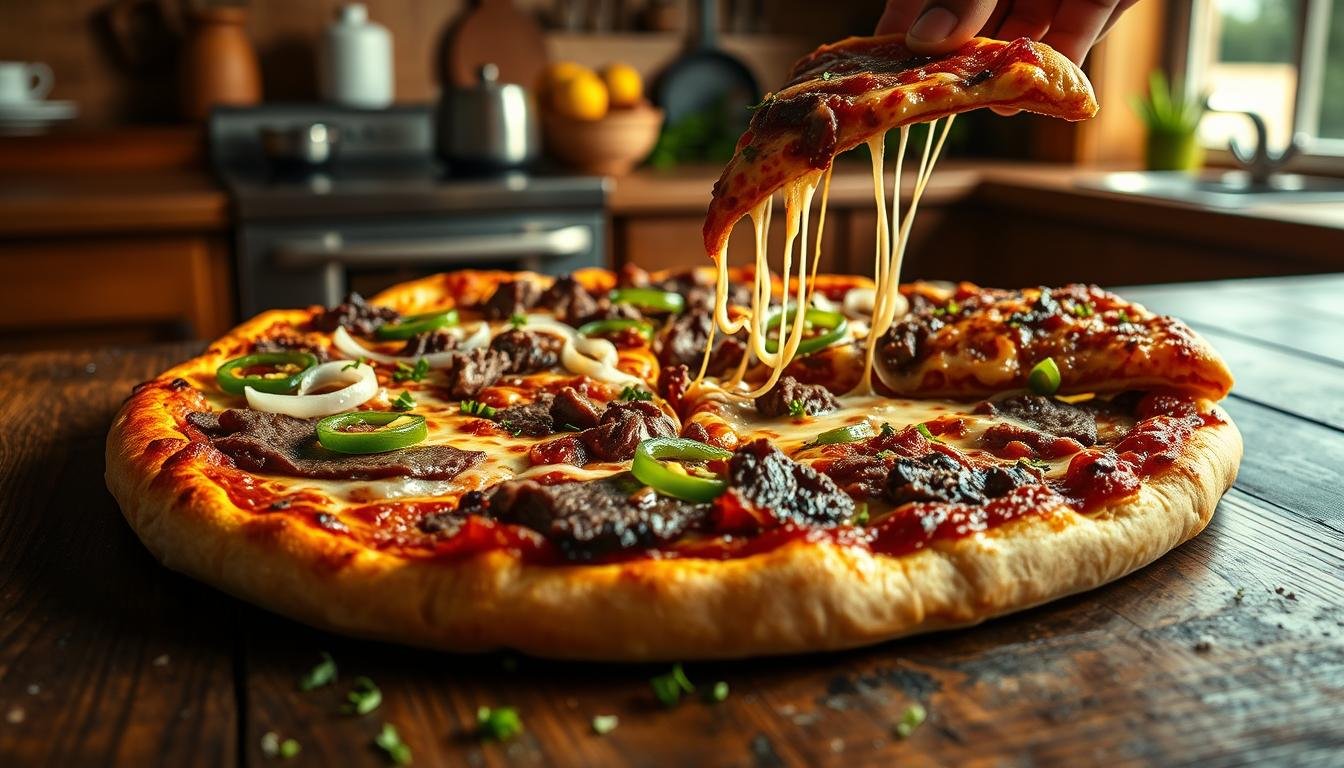
Let’s examine the build of a meal that blends sandwich flavors with a crisp crust. The pie arrives loaded with thin slices of tender steak, caramelized onions, bell peppers, provolone and American cheese.

This Feast-class specialty carries a higher price than a standard pie, but many customers say the rich cheesesteak profile justifies the cost. The recipe mimics a classic sandwich more than a tomato-based pie, offering a savory, melty experience.

  • The topping mix prioritizes melted cheese and savory meat over sauce.
  • Its sandwich-like design sets it apart from pepperoni or sausage pies.
  • We compare ordering convenience with the time and control you gain at home.
Feature Order (Feast) Make at Home
Cost Higher menu price for specialty pie Lower if using leftover steak
Time Minimal wait for delivery or pickup Prep and cook time, more hands-on
Ingredient Control Fixed toppings and portions Customize cheese, peppers, and steak doneness

Deconstructing the Flavor Profile and Ingredients

Here we analyze how each ingredient interacts to create the pizza’s bold, sandwich-like flavor. We focus on the cheeses, the cut of the meat, and the supporting vegetables that balance richness with brightness.
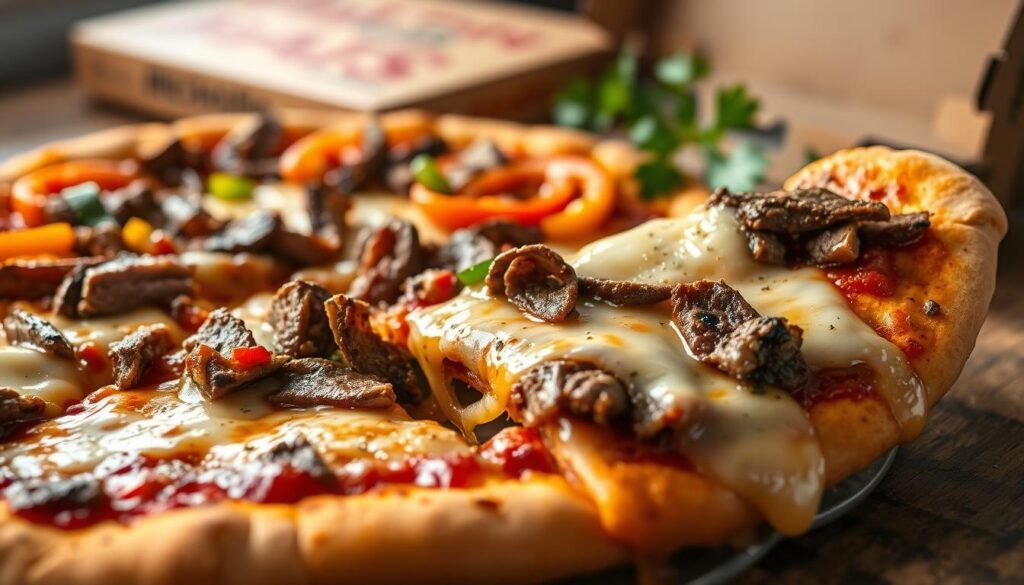
A close-up image of a tantalizing Philly cheesesteak pizza, featuring a golden-brown crust topped with juicy, thinly sliced steak, melted provolone cheese oozing over the edges, and colorful bell peppers. In the foreground, the pizza slice is slightly pulled away, showcasing its gooey cheese stretch. The middle ground includes a rustic wooden table, enhancing the homely atmosphere, while soft, diffused lighting casts warm tones to highlight the delicious toppings. In the background, a blurred out pizza box and a few sprigs of fresh parsley add a touch of greenery. The overall mood is inviting and appetizing, aimed at emphasizing the rich flavor profile and fresh ingredients.

The Role of Provolone and American Cheese

The blend of mozzarella, provolone, and American cheese gives a layered melt. Mozzarella adds stretch and mildness.

Provolone brings a sharp, slightly tangy note that echoes classic cheesesteak flavors. American cheese contributes creaminess and helps bind toppings on each slice.

The Importance of Thinly Sliced Steak

Using thinly sliced steak—about 1/8-inch strips—keeps the meat tender under high oven heat. Thin slices cook quickly and stay juicy without drying.

Sautéed onions, caramelized onions, green peppers, and white button mushrooms add contrast. The absence of tomato sauce lets the steak and cheeses lead the flavor.

  • Mozzarella + provolone + American = creamy, savory mouthfeel
  • Thinly sliced steak ensures even cooking and tenderness
  • Green peppers and caramelized onions cut the richness
  • White button mushrooms add an earthy undernote
Ingredient Function Effect on Slice
Provolone Tangy, melts well Elevates cheesesteak character
American Creamy binder Smooth, rich mouthfeel
Thinly sliced steak Quick cook, tender Evenly distributed meat in each bite
Green peppers & onions Sweetness and crunch Brightens heavy cheeses and meat

Evaluating the Crust and Texture

We evaluate how the dough and garlic oil foundation change the eating experience. Texture starts with dough handling and ends with heat and timing.
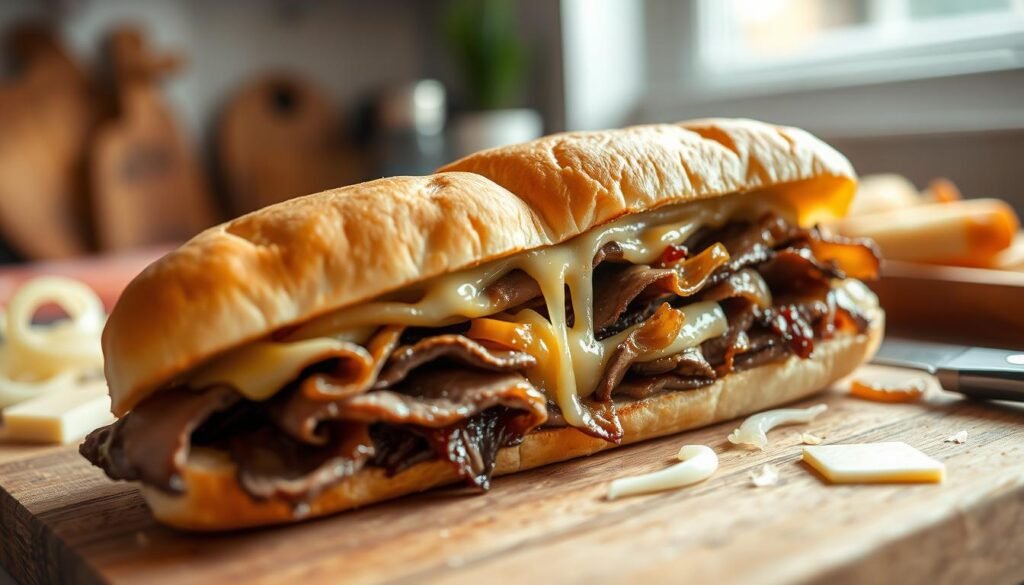
A close-up shot of a delicious Philly cheesesteak sandwich, showcasing its layers of thinly sliced steak, melted cheese, and sautéed onions, all nestled in a soft, golden hoagie roll. The foreground highlights the sandwich, with gooey cheese stretching tantalizingly as the sandwich is gently pulled apart. In the middle, a rustic wooden cutting board provides context, with a few scattered ingredients like additional onions and cheese slices. The background is softly blurred, featuring a warm, inviting kitchen setting, with gentle, natural light illuminating the scene to enhance the rich colors of the food. The overall mood is cozy and appetizing, emphasizing the texture of the crust and the indulgence of the cheesesteak.

The Impact of Garlic and Oil Bases

Instead of tomato sauce, the base is brushed with olive oil and minced garlic. That oil layer adds fragrance and helps the cheeses meld on top.

We stretch the dough to 12–14 inches and poke it with a fork. Those fork tines stop large bubbles and keep a uniform surface for toppings.

  • Bake at 450°F for 12–15 minutes to get a golden, crisp crust with a slight chew.
  • A 14-inch pan promotes even heat, matching professional texture across the whole pan.
  • The garlic-infused oil enhances provolone and American cheese, tying the meat and sauces together.
  • Proper dough rest and handling determine the final structure and bite of each slice.
Step Why It Matters Result
Brush with garlic + oil Replaces tomato sauce for this style Fragrant, cohesive cheese layer
Fork poke dough Prevents large air pockets Even topping surface and bake
450°F for 12–15 min on 14″ pan High, consistent heat Golden crisp crust with chew

Comparing the Value of Specialty Pizzas

Comparing price, convenience, and ingredient quality reveals the true value of specialty offerings.
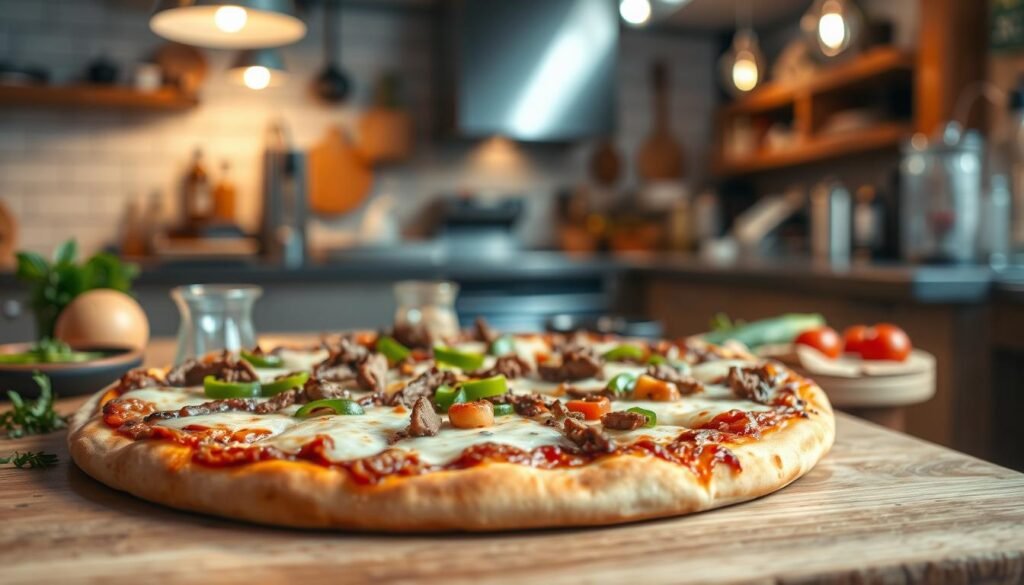
A mouth-watering cheese steak pizza sits prominently in the foreground, showcasing a golden-brown crust topped with melted mozzarella cheese, tender strips of steak, sautéed onions, and green peppers, all glistening with deliciousness. The middle ground features a rustic wooden table adorned with a few scattered ingredients like fresh herbs and pizza slices, emphasizing the artisanal quality of the dish. In the background, a softly blurred kitchen setting hints at a lively restaurant ambiance with warm overhead lighting casting a cozy glow. The overall mood is inviting and appetizing, ideal for showcasing the indulgence of specialty pizzas. The image should be captured from a slightly elevated angle to highlight the pizza's toppings and textures, creating a sense of warmth and celebration around this delectable dish.

Specialty pies often cost more because high-grade steak and generous cheese portions raise ingredient bills. Many national promotions exclude these items or add surcharges, which changes the final price.

Delivery fees, taxes, and local store pricing can inflate a single order faster than expected. That makes a homemade option attractive when we want control over portion size and quality.

  • Order: higher menu price, possible promo exclusions, plus delivery and tax.
  • Make at home: upfront ingredient cost but better control of steak and cheese portions.
  • Value depends on steak quality and how generous the cheese topping is.
Factor Order Homemade
Cost Higher per pie with fees Lower per serving with bulk buys
Convenience Fast delivery More prep time, customizable
Satisfaction Depends on cheese and steak portion Control over quality and portion

Crafting a Homemade Version of the Classic

This section walks us through building an authentic homemade version from ingredient choice to bake.

Selecting Quality Ribeye

We pick rib eye for its marbling and flavor; top sirloin is a budget-friendly alternative. Freeze the ribeye for 45–60 minutes to make thinly sliced, 1/8-inch strips easier to cut.

Preparing Fresh Vegetables

Sauté green peppers, onions, and white button mushrooms first. Doing so softens them and prevents soggy toppings after the final bake.

Dough Rising Techniques

Activate yeast in warm water for about 10 minutes before mixing. Let the pizza dough rise 30 minutes until doubled, then stretch on a 14-inch pan for even bake and proper crust support.

  • Choose high-quality provolone and American cheese for true cheesesteak flavor.
  • Sear thinly sliced steak quickly to keep it tender and juicy.
  • Pre-cook vegetables to concentrate sweetness and reduce moisture.
Step Why Result
Freeze and thin-slice ribeye Easier, uniform strips Tender, even-cooked meat
Sauté vegetables Reduce moisture No soggy slices
30-min dough rise on 14″ pan Proper yeast action and size Golden, sturdy crust

Final Thoughts on Our Pizza Experience

We wrap up by weighing taste, value, and how well this indulgent topping mix holds together on a slice.

Our experience confirms the cheese steak pizza offers a rich alternative to tomato-based pies. Tender steak and melted cheese pair with sautéed onions to create a comforting, indulgent profile.

Balanced peppers and mushrooms add freshness so the pie never feels too heavy. Sauce is minimal here, which lets meat and cheese lead the flavor.

Whether you try a domino philly cheese from a store or make one at home, quality meat is the deciding factor. We encourage you to tweak steak and cheese ratios until the slices match your taste.
FAQ

What makes the Dominos Philly Steak Pizza different from a regular cheesesteak or other meat pies?

We focus on a combination of thinly sliced rib eye, melted American and provolone cheeses, and complementary toppings such as green peppers, onions, and mushrooms on a pizza dough base. The result blends cheesesteak flavors with pizza techniques — a sauced or white base, layered cheeses, and a crisp or pan crust — to create a hybrid that highlights both melted cheese and seasoned steak.

Which cheeses work best for recreating this flavor at home?

We recommend a mix of provolone for its mild, tangy melt and American for its creamy stretch. Adding shredded mozzarella helps with pull and coverage. For sharper notes, a light dusting of cheddar complements without overpowering the core cheeses.

Should we use tomato sauce or an alfredo/white base when making a homemade version?

Both work, but each shifts the profile. Tomato sauce adds acidity and traditional pizza notes; an alfredo or garlic-oil base emphasizes creamy, savory steak flavors. We prefer a thin layer of garlic oil or alfredo to keep the meat and cheeses front and center.

How thin should the steak be sliced, and which cut is best?

We advise very thinly sliced ribeye or top round for tenderness and quick cooking. Thin slices sear fast, stay juicy, and integrate better with the cheese. Partially freezing the roast for 30–45 minutes makes slicing easier.

What vegetables pair best, and how should they be prepared?

Green peppers, white button mushrooms, and onions are classic choices. We sauté onions and mushrooms until caramelized to boost sweetness and reduce moisture. Peppers should be lightly cooked to retain texture and color.

How do dough and crust choices change the final dish?

A thin crust highlights toppings and yields a crisp bite, while a pan or hand-tossed crust provides chew and holds more topping weight. Dough hydration and baking temperature influence texture: higher heat gives blistered edges; longer, lower heat encourages even bake and a chewier center.

Can we use pre-cooked steak or deli roast for convenience?

Yes, but we suggest warming and lightly searing pre-cooked slices to refresh flavor and reduce excess moisture. Deli roast works in a pinch, yet fresh-seared ribeye or top round delivers better texture and a more authentic taste.

What cooking time and temperature produce the best results?

For home ovens, preheat to 475–500°F. Bake 8–12 minutes on a pizza stone or steel for thin crust; 12–18 minutes for thicker pan styles. Watch cheese melt and crust color; remove when edges brown and cheese bubbles.

How can we avoid a soggy center from meat and vegetables?

We drain or pat dry sautéed vegetables and briefly pat the steak slices. Use a light hand with sauce and spread cheeses evenly to act as a moisture barrier. Partially pre-baking the crust for a few minutes also helps prevent sogginess.

Are there good sauce-free alternatives for this style?

Absolutely. A white base using garlic-infused olive oil or a thin alfredo layer showcases the steak and cheeses without tomato acidity. This approach often yields a richer, cheesier finish closer to classic cheesesteak flavors.

What topping combinations elevate the flavor without overpowering the steak?

We suggest caramelized onions, sautéed mushrooms, roasted red peppers, and a modest sprinkle of shredded mozzarella. A few dashes of cracked black pepper or a finishing drizzle of olive oil enhance aroma without masking the meat and cheeses.

How many slices can we expect from a medium or large pie when serving guests?

A medium pie typically yields 6–8 slices, and a large yields 8–10, depending on cut size. For gatherings, plan on 2–3 slices per adult when offering sides or multiple pizzas.

Can we adapt this style for a gluten-free or low-carb diet?

Yes. Use a certified gluten-free crust or a cauliflower crust for low-carb. Bake according to the crust instructions and be mindful that alternative crusts may need gentler temperatures and shorter bake times to prevent drying.

What storage and reheating tips preserve flavor and texture?

Store cooled leftovers in an airtight container for up to 3 days. Reheat in an oven at 375°F or on a skillet to revive crust crispness and melt cheese evenly. Microwaving works for convenience but may soften the crust.

Similar Posts

  • Dominos Coupon Codes Today

    We help you find the best ways to save on pizza orders and pizza delivery. Our team tracks current offers, promo options, and discounts so you can get pizza for less. Since 1960, when Tom and James Monaghan started Domino’s Pizza, the brand has grown to over 13,000 stores worldwide. Right now we monitor 19…

  • Dominos Pizza Prices

    We welcome you to our quick guide for the 740 S Olive St location in Los Angeles. We outline menu options and transparent prices so you can plan a fast, tasty meal with confidence. Our menu features many pizza choices to suit varied tastes. We keep offerings affordable so families and individuals can enjoy quality…

  • Dominos Free Pizza

    We launched the Emergency Pizza program to help customers who face sudden problems and need a quick, hot meal. When life throws an emergency—like a broken oven or unexpected bills—our offer lets qualifying users claim a medium two-topping pizza with a qualifying online order. We built this program so delivery can turn a tough day…

  • Dominos Pizza Menu

    We welcome you to start your order at our local domino in Bear, DE and explore options made for every appetite. Our team serves a broad selection of pizza crafted with consistent care. We focus on quality ingredients and fast, friendly service so every domino pizza reaches you hot and fresh. Whether you want a…

  • Dominos Pan Pizza

    We tested the new medium 12″ offering priced at $7.99 to see if it could shift the delivery market. Our team ordered the item with two toppings and tracked the full experience from order to table. The pie arrived in about 20 minutes, and the delivery stayed hot. We noticed the handmade pan pizza crust…

Leave a Reply

Your email address will not be published. Required fields are marked *